How to Rake Singletrack This Fall (And When Not To)
Leaf season is here in Benton County, and that means it’s time to talk trail maintenance. But before you grab a rake or leaf blower and head out to your favorite trail, there’s something you need to know: not every trail should be raked, and raking the wrong way can do more harm than good.
Not All Trails Should Be Raked
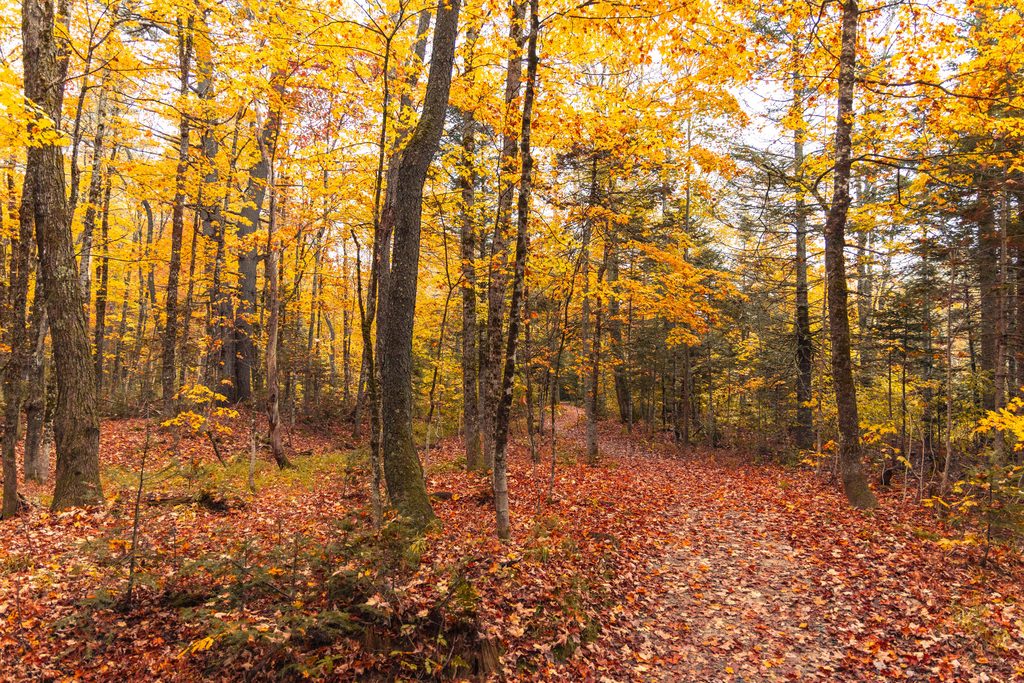
Here’s the truth: if you’re on hand-built trails like much of Back 40, Little Sugar, or Handcut Hollow, leave the leaves alone. Those leaves aren’t trail debris — they’re part of how the trail builds itself. As they break down over fall and winter, they help form the rich, compact dirt that makes hand-built singletrack ride so well come spring. Rake them off, and you’re removing the raw material the trail needs to heal and improve.
And one more thing while we’re on the subject: we don’t recommend ever using a leaf blower on hand-built trails. Even where some leaf clearing does make sense, a blower strips organic material far too aggressively and disturbs loose soil in ways a hand rake never will. If you’re doing trail work, stick to hand tools.
Where Raking Fall Does Matter: Machine-Built Singletrack
The tips below are for our machine-built trails — think The Castle and Huntley Gravity Zone — where fall leaf buildup can genuinely interfere with drainage and ride quality.
1. Keep Singletrack Single
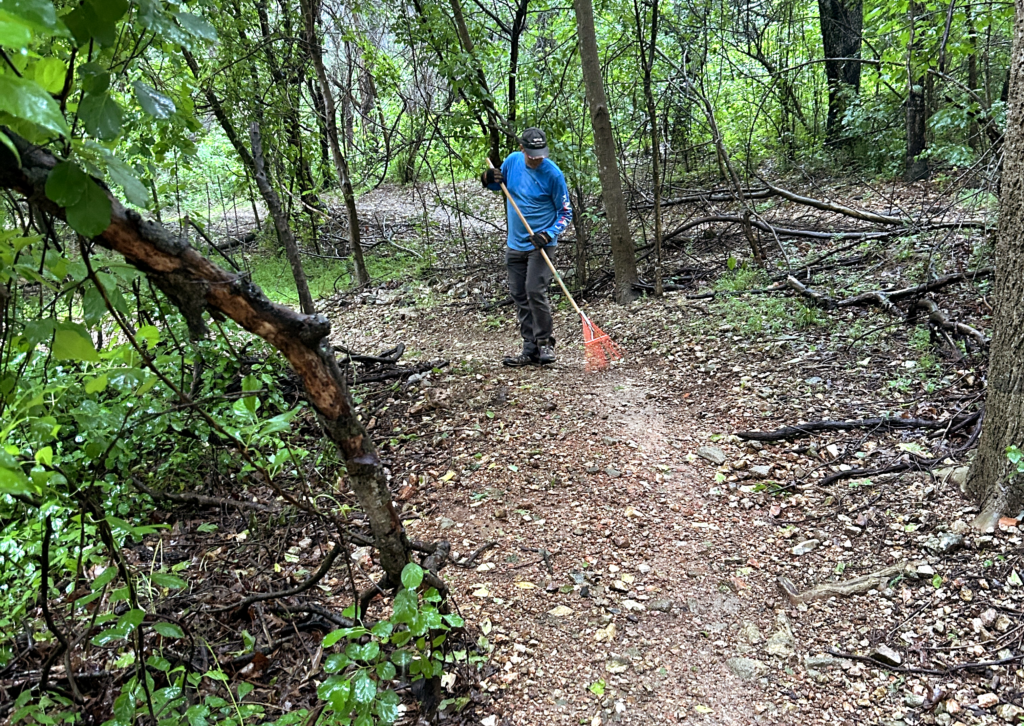
Rake only the established tread. It’s tempting to clear a little extra on either side, but every inch you clear beyond the existing line is an inch riders will eventually start using. Stay within the trail’s intended width, and you keep traffic concentrated where the trail was actually built to handle it.
2. Clear the Edges — All the Way
Don’t just push leaves to the side. A pile of leaves along the edge of the trail is a pile of leaves that’s going to wash right back onto the tread the next time it rains, and it can block the drainage the trail depends on. Get the debris off the trail corridor entirely, not just out of the way.
3. Go Easy — Remove Leaves, Not Dirt
The goal is to expose firm mineral soil, not tear up the surface underneath it. A flat rake or leaf rake is the right tool for this job — light, controlled strokes that clear debris without disturbing the stable soil below. Save the McLeod for actual tread shaping and cutting; it’s more tool than fall leaf cleanup needs.
4. Think Drainage First
Every rake stroke should answer one question: where will the water go? A trail that’s raked well sheds water OFF the tread. A trail that’s raked carelessly channels water DOWN it — and that’s how you get erosion and ruts. Keep the trail’s existing out slope—the slight downhill tilt built into the trail’s tread—intact, and don’t let leaf piles or careless raking create accidental berms that trap water instead of shedding it.
5. Don’t Overdo It
Not every leaf needs to go. The goal isn’t a manicured, leaf-free trail — it’s a healthy, sustainable one. Over-raking flattens the natural tread shape and can do nearly as much damage as not raking at all. Less disturbance, done with intention, beats aggressive clearing every time.
Why It Matters
Good trail maintenance is supposed to be almost invisible. Done right, raking protects the trail from erosion, keeps water moving where it should, and lets our hand-built trails build great dirt all winter long. Done wrong — or in the wrong place — it can undo months of trail work in a single afternoon.
So this fall: know your trail, use the right tool, and when in doubt, leave the leaves.
 Poison Hemlock Alert – Help Us Keep the Trails Safe
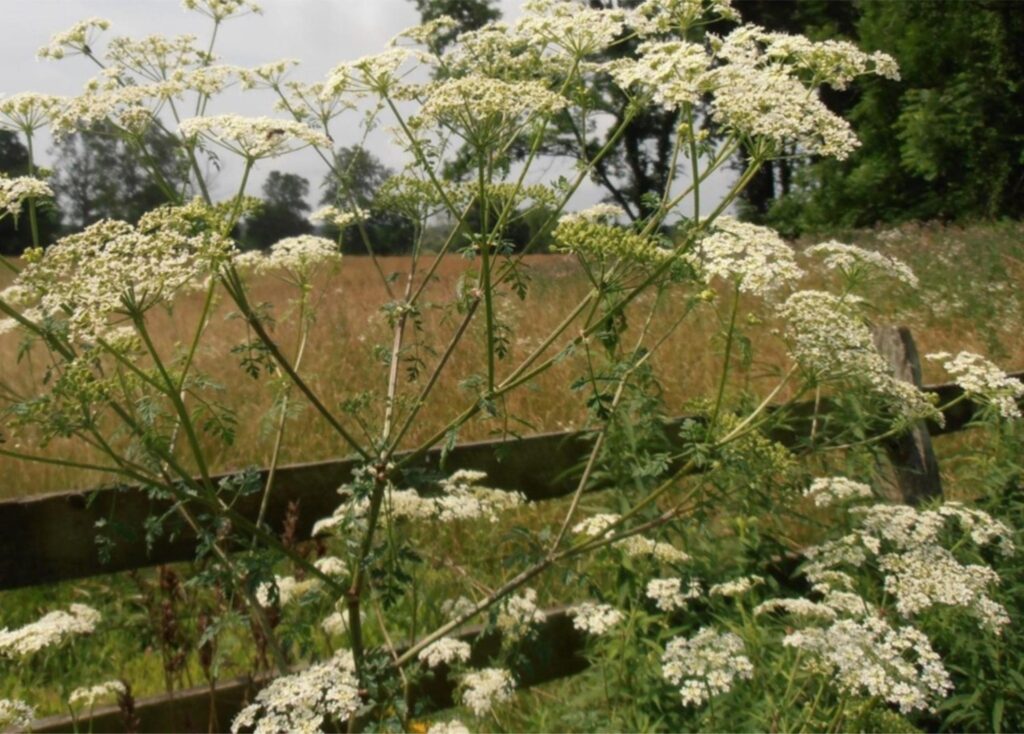
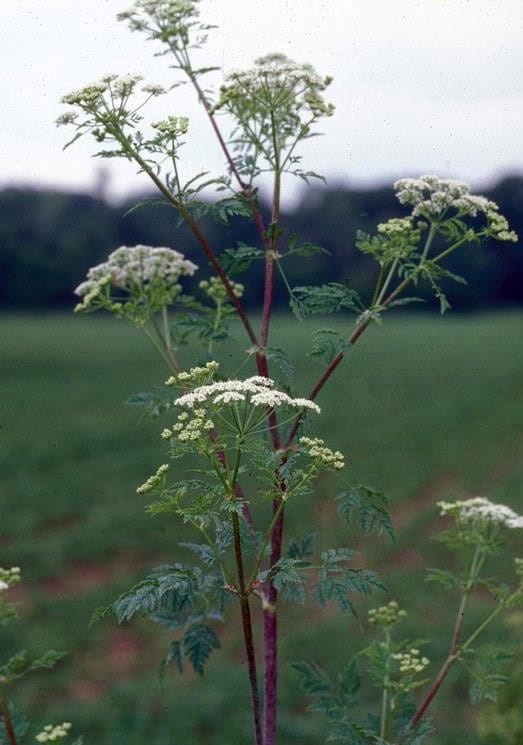
 How to Identify Poison Hemlock:

 Safe Removal Guidelines:
 What Not to Do:


 Ride when trails are either dry or frozen solid (like early morning after a hard freeze).


 Clearing Debris – Rake off leaves, sticks, and loose sediment that have built up over the winter. A clean tread means better drainage and fewer erosion issues down the road.


